
Why and How You Should Use AI in Your Small Business - But Not Replace Experts with It
Let’s get one thing straight: I’m not anti-AI (environmental factors aside). I’m writing this with the help of it, actually (hi there! ). But let’s also be honest – there’s a big difference between using AI to support your business and using it to replace the brilliant humans who make it special. We can also happily get into a discussion about the environmental impact of it, but this post is more about if you’re thinking about using it or already made the decision to use it in your business.
AI is having its moment, and honestly? I get the hype. It can feel like you’ve hired a hundred tiny assistants with boundless energy and questionable spelling. But as small business owners, especially in creative and service-based industries, we’ve got to be clear on where AI fits into the bigger picture.
Here’s how I use AI tools in my own business:
1. Brainstorming + Writing Support
There are days where my brain is fried from client work, admin, and life. When I sit down to write a blog post or social media caption and feel completely stuck, I’ll open up ChatGPT and ask it to help me get started. I might say, “Give me 5 ways personal branding helps your business grow,” and use that as a jumping-off point. It helps break the blank page panic.
That said – I never copy-paste a full AI draft. It’s more like having a sounding board, or a colleague to bounce ideas off when the dogs I hang out with don’t offer much input.
I’ve also started braindumping ideas and thoughts via voice notes into ChatGPT and ask it to create something that makes sense from my ramblings and honestly it’s a game changer. It sounds like me, they are my thoughts, just a bit more structured and to the point. Something that would have otherwise taken me days or would have landed in a nirvana of drafts, never to see the light of the day. I once recorded a 22 min (!) voice note plus some bullet point notes that AI turned into a blog post that I was really proud of after making some final adjustments.
And that’s the key - never just ask it to create content based on one subject without giving it things you want to actually say and without giving it your very own final touch.
2. Image Culling
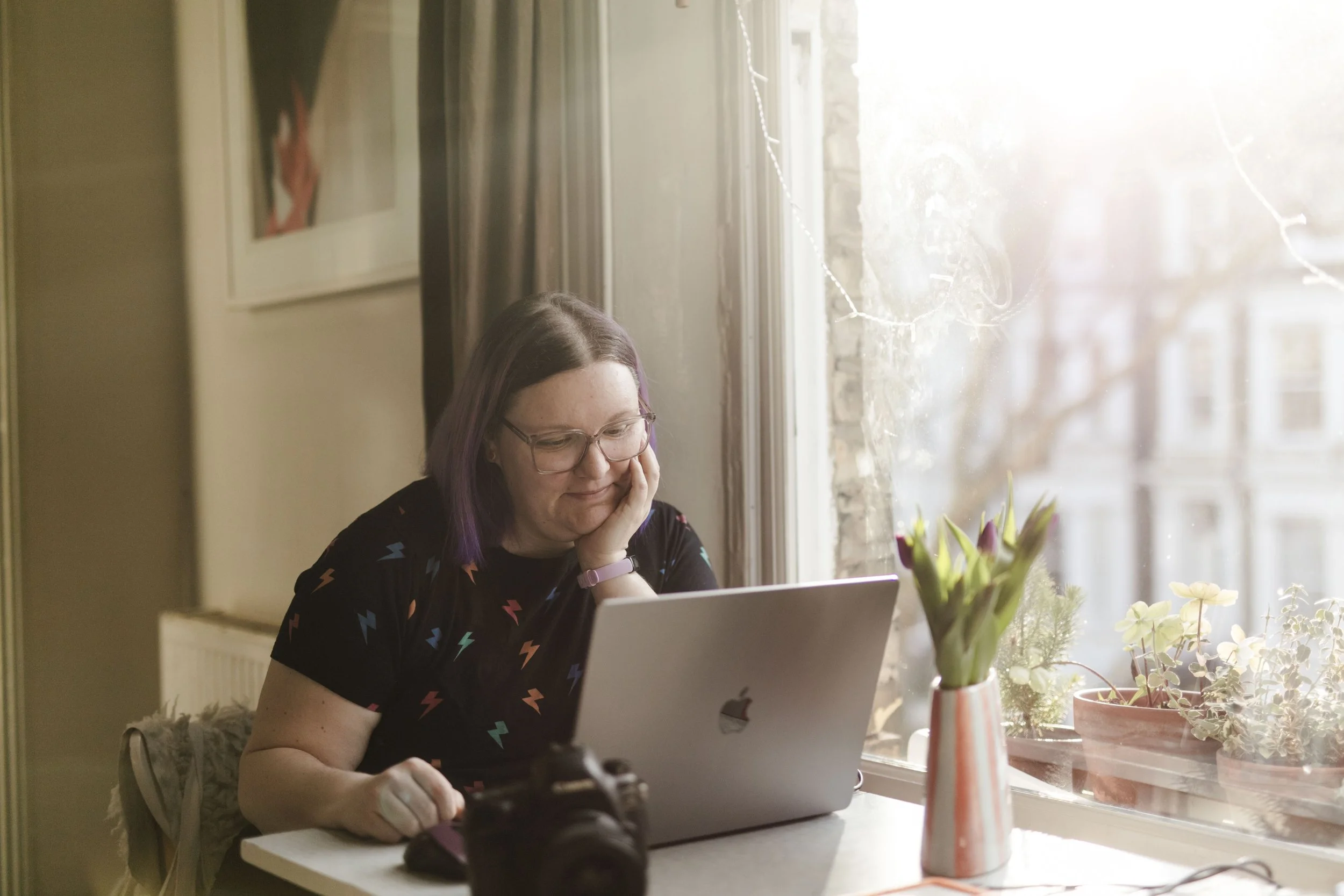
Anyone who’s ever shot a few thousand photos in one day knows: going through them all is a long, soul-sapping task. I use AI photo culling software (like AfterShoot) to whittle them down based on blinks, duplicates and technical stuff. It saves me hours – but I still give everything a check before delivering anything. Sometimes the sofware will get rid of somthing that’s actually an amazing image, because it registers it as eyes closed or selects it based on previous choices made. That’s when my human touch comes in.
3. Light Editing + Workflow Tools
I use AI tools to apply my editing style on images with one click and only a few minutes of processing time. I then go through the gallery again manually to make adjustments where needed, as every light or location change needs different settings and it’s really important to me to give every image the attention it deserves. When a job is more complex – for example, on the rare occasion when a client requests more in-depth retouching – I send it to my trusted human retoucher who knows my style inside out.
Because here’s the thing: AI is fast and consistent. But it’s not intuitive. It doesn’t know when someone’s skin needs gentleness instead of airbrushing, or when a smile is perfect because it’s real - not technically flawless.
So... should you use AI in your small business?
Absolutely – if it makes your life easier, helps you get unstuck or saves you time. But should you replace the experts? No. And not just because of quality.
Hiring a great copywriter, designer, or editor doesn’t just buy you results – it buys you relief. It gives you space to do what you’re brilliant at. And it supports someone else’s business, too.
For example: I used ChatGPT to help refine my thoughts for this post, but the sales page copy and About Me page on my website? That came from a brilliant human copywriter who completely got me. I was too close to it and I needed someone with fresh eyes, skill, and a knack for making things sound like me, but better.
AI can give you good. But often, your business needs brilliant and uniquely YOU. And that’s where the humans come in. A few tips for using AI responsibly:
Don’t skip the proofreading. AI gets weird. (Ask me about the time it made up a service I didn’t offer or kept getting a date wrong.)
Keep your voice front and centre. That’s your brand’s secret sauce – not something a robot can replicate.
I recommend using it as a middleman. It should be: YOU - AI - YOU. Don’t just ask it to create a generic post and be done with it.
Be transparent if you’re using AI for client-facing work – it builds trust.
Ultimately, I believe in using tools that support us, not replace us. I believe in collaboration, community and paying people fairly for their talent. If AI can help me do more of that – amazing. But I’ll always leave space in my business for real, human brilliance.
Because that’s the stuff that truly connects. Not replacing trained and talented experts with It.
So yes, AI is great. It’s fast. It’s helpful. It’s often magic. But it’s not your business partner, your creative collaborator, or your branding bestie. Use it wisely and always leave room (and budget) for the humans who bring the spark.
